

How to Save LPG Gas at Home: Do Gas-Saver Burners Actually Work? (2026 Guide)
If you've watched a 12.5kg Litro or Laugfs cylinder empty faster than it used to, you're not imagining it. Between higher household cooking loads and cylinder prices that have moved twice already in 2026, most Sri Lankan kitchens are actively hunting for ways to save LPG gas, and "gas-saver stove" is a common search. The honest answer is a little disappointing and a little useful at the same time: gas-saver burners help, but not as much as three habits you can start using tonight, for free.
Quick answer
- Gas-saver burners help, but only modestly, and only with a pot that fits the burner.
- Free habits save more: match the flame to the pot and turn it down once it boils.
- A pressure cooker is the biggest saver: dhal in under 10 minutes instead of 35.
- A family of four can stretch a 12.5kg cylinder from about 30 days to 40 or more.
In this guide
What Is a "Gas-Saver" Burner, and Does It Actually Save Gas?
Most gas-saver burners work on the same basic idea: a burner head with a wider ring of smaller, more tightly spaced flame ports instead of one large ring. That spreads the flame more evenly across the base of the pot instead of concentrating heat in the centre and letting the rest escape up the sides. In real terms, that means less heat wasted around the edges of your dhal pot or curry vessel, which genuinely does translate into a shorter cooking time and less gas burned per dish.
What it does not do is defy physics. A gas-saver burner gives a modest saving over a basic wide-ring burner, and only when you're using a pot that actually matches the burner size. Put a small saucepan on it, or leave the flame roaring on high for a simmering dhal, and you lose most of that advantage. The burner design is a genuine improvement, but it is not a substitute for the habits below.
The Habits That Waste More Gas Than Any Burner Design
Before you shop for a gas-saver stove, three free changes save more gas than the burner itself:
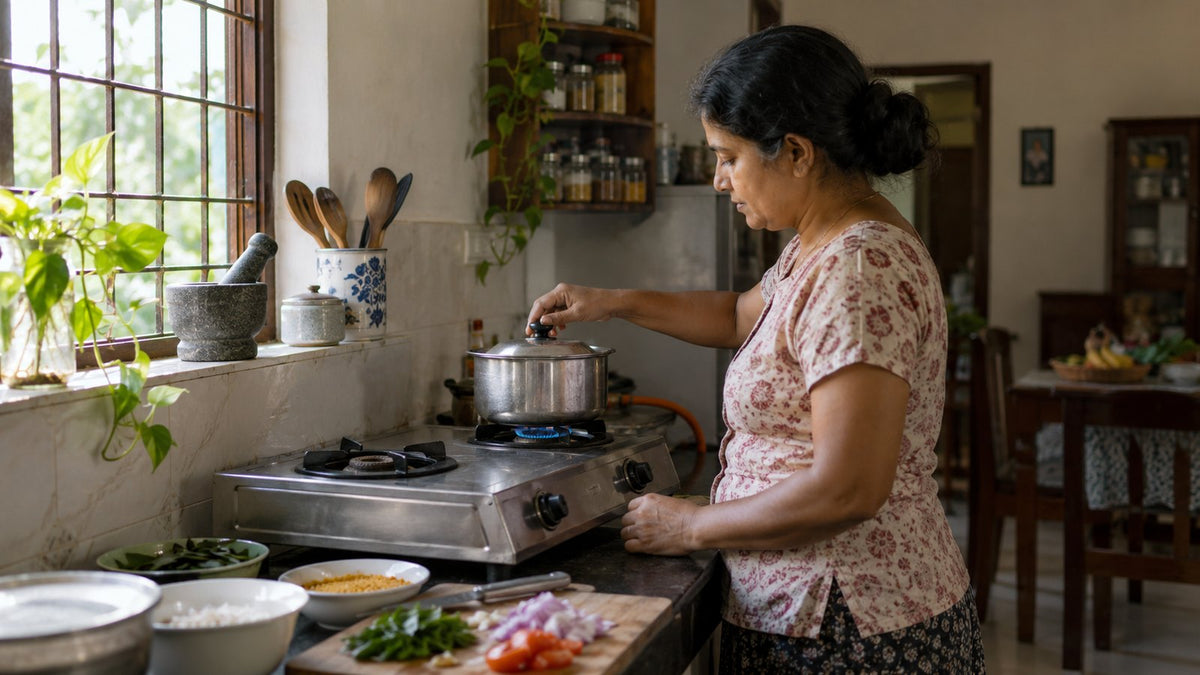
Match the flame to the pot. A large blue flame licking up the sides of a small saucepan is pure waste; that heat is warming your kitchen, not your food. Keep the flame within the base diameter of the pot.
Lower the flame the moment it boils. Dhal, red rice, and most curries only need a rolling boil to start; after that, a low-to-medium flame finishes the job just as well and burns a fraction of the gas. This single change saves more gas over a month than any burner upgrade.
Clean the burner jets every few weeks, especially in coastal towns. Salt air in places like Negombo, Galle, and Trincomalee corrodes burner jets faster than in Colombo's interior suburbs, and a clogged or corroded jet burns orange instead of blue, a clear sign gas is being wasted as soot instead of heat. A blue, steady flame is an efficient flame; a yellow, flickering one means it's time to clean the burner head with a pin and warm soapy water.
The Real #1 Gas-Saver: Your Pressure Cooker
If you want the single biggest gas-saving change in a Sri Lankan kitchen, it isn't a burner at all; it's using a pressure cooker for anything that would otherwise simmer on the stove for 30 to 45 minutes. Dhal that takes 35 minutes in an open pot cooks in under 10 minutes under pressure. Red rice, chickpeas, jackfruit curry, and tougher cuts of beef or mutton all see the same effect: sealed steam pressure cooks food faster at a lower, steadier flame than an open pot ever can. Across a month of regular cooking, a household that switches its dhal, rice, and curry routine to a pressure cooker typically uses noticeably less gas than one cooking everything in open pots, gas-saver burner or not.
How Long Should a 12.5kg Cylinder Actually Last?
In September 2026, a 12.5kg Litro cylinder is Rs 4,365 (prices are announced monthly and vary slightly by district, so treat this as a guide). How long that cylinder lasts depends heavily on household size and cooking habits, not just the stove itself.
| Household size | Typical cylinder life (open-pot cooking) | With pressure cooker + good flame habits |
|---|---|---|
| 1 to 2 people | 45 to 55 days | 55 to 70 days |
| 3 to 4 people | 30 to 40 days | 40 to 50 days |
| 5+ people / joint family | 20 to 28 days | 28 to 35 days |
Roughly, at Rs 4,365 a cylinder, a household stretching a cylinder from 30 days to 40 days is cutting its per-day gas cost from about Rs 146 to about Rs 109, savings that come entirely from habits and a pressure cooker, not from any stove purchase.
None of this means the stove doesn't matter: a clean burner with a steady blue flame and a pot that fits it is the base for every saving above. The bigger win is a pressure cooker for anything that would otherwise simmer for half an hour.
Frequently Asked Questions
Do gas-saver stoves actually reduce LPG consumption in Sri Lanka?
Yes, modestly. A well-designed gas-saver burner uses a little less gas than a basic burner, mainly by spreading heat more evenly under the pot. The bigger savings come from flame-size habits and pressure cooking, not the burner alone.
Does a pressure cooker really save more gas than a gas-saver stove?
For dishes like dhal, rice, and curries that would otherwise simmer for 30+ minutes, yes. Pressure cooking typically cuts cooking time by two-thirds or more, which usually outweighs the savings from burner design changes alone.
How often should I clean my gas burner jets in Sri Lanka?
Every 3 to 4 weeks for most households, and more often in coastal areas where salt air corrodes jets faster. A steady blue flame means it's clean and efficient; a yellow, flickering flame means gas is being wasted and the jets need attention.
How long should a 12.5kg gas cylinder last for a family of four?
With open-pot cooking, expect roughly 30 to 40 days. Switching regular dhal, rice, and curry cooking to a pressure cooker and keeping flames matched to pot size can stretch that to 40 to 50 days for the same household.
Need a hand choosing?
Not sure which stove or habit fits your kitchen? WhatsApp us a photo of your current stove on 0776882898 and we'll tell you honestly whether a new burner is worth it for you, or whether a pressure cooker will save you more.
Shop Gas CookersShop Pressure CookersKitchen Appliance FAQWhatsApp 0776882898