

Glass Top vs Stainless Steel Gas Cooker: Which Is Better for a Sri Lankan Kitchen?
Glass top or stainless steel? What actually separates two 2-burner gas cookers with the same burners and price, and which one suits a Sri Lankan kitchen.
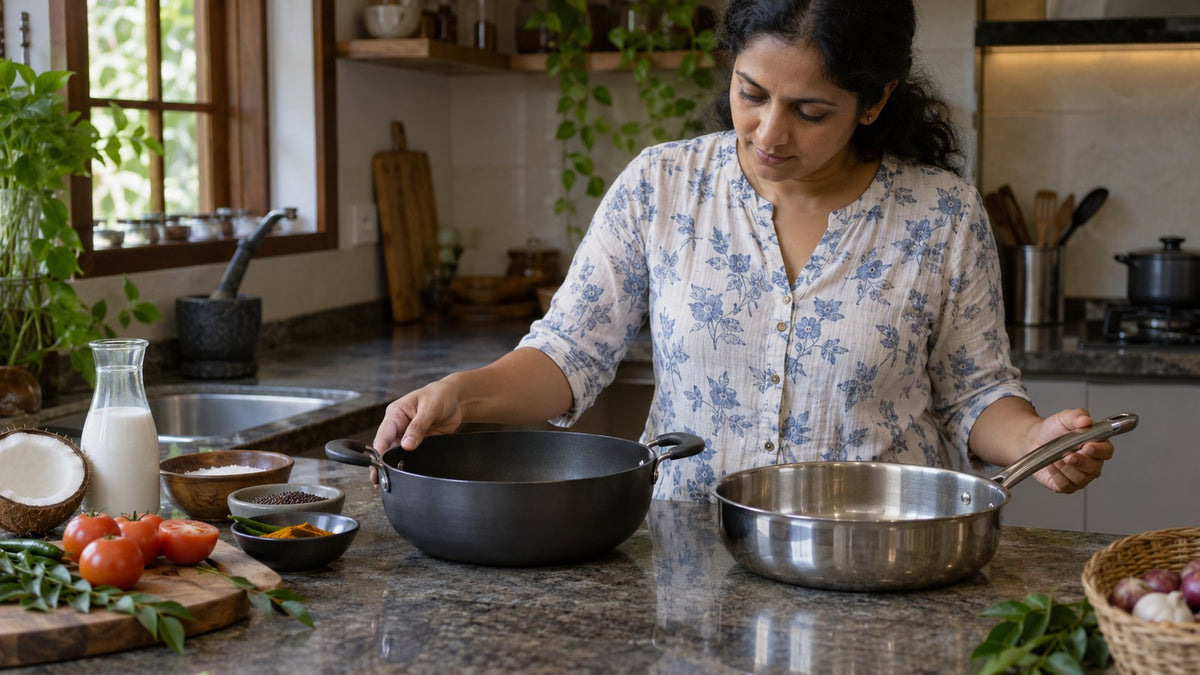
Standing in front of a shelf of 2-burner gas cookers, most Sri Lankan buyers hit the same wall: two cookers, same burner count, same price range, and the only real difference on the spec sheet is "glass top" or "stainless steel." It looks like a style choice. It isn't quite that simple once you factor in what actually happens on a Sri Lankan stovetop: tempering mustard seeds at high heat, a pot of dhal boiling over, or a curry left simmering for an hour while you attend to three other things at once. Both finishes have a real answer to that reality, and they're not the same answer. (You'll also see this same appliance listed as a "gas hob" rather than a gas cooker on some sites; the two terms are used interchangeably in Sri Lanka.)
Quick answer
- Both finishes handle high-heat Sri Lankan cooking. The real differences are cleaning, scratches and thermal shock.
- Stainless steel suits daily family cooking: no thermal shock risk and it takes scouring.
- Glass top suits lighter use and a sleeker look. Never splash cold water on a hot glass surface.
- Burner count and ignition change the price more than the finish. 2-burner cookers start at Rs 5,499 at Green Life.
In this guide
Glass Top vs Stainless Steel: What Actually Differs?
| Factor | Tempered Glass Top | Stainless Steel |
|---|---|---|
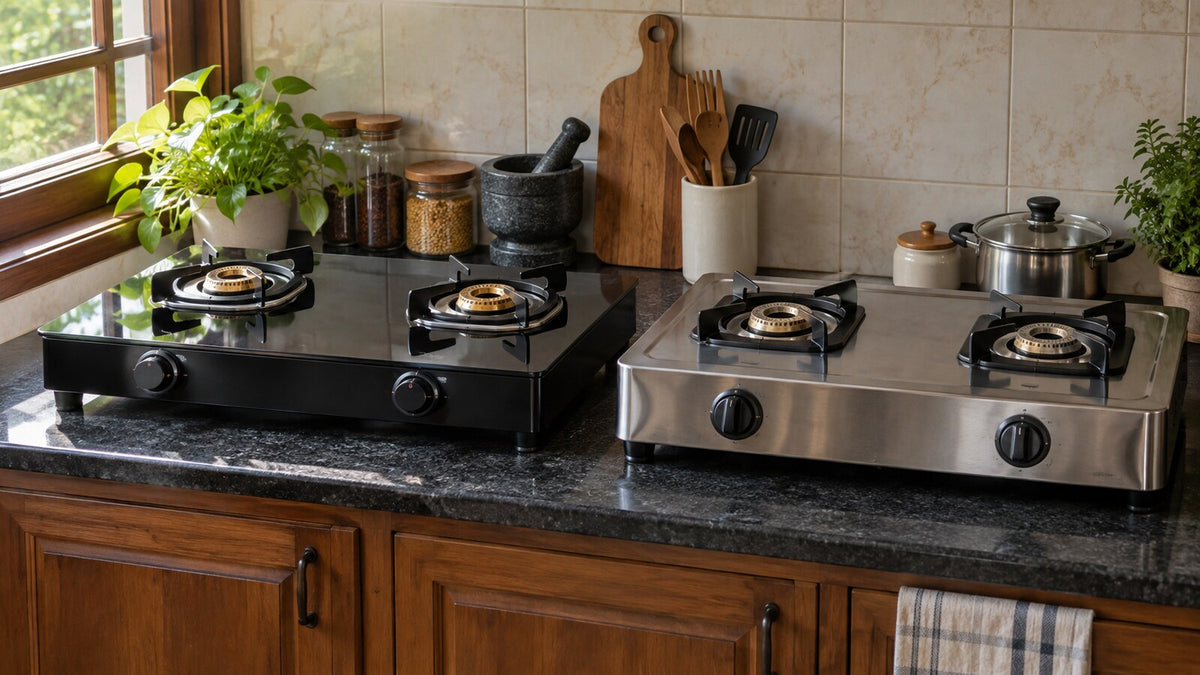
| Heat resistance | High. Tempered glass is built for stovetop heat, but a sudden temperature shock (cold water on a hot surface) can crack it | Very high. Unaffected by heat or thermal shock, handles decades of direct flame exposure |
| Scratch resistance | Lower. Metal pot bases and abrasive scourers will mark the surface over time | Higher. Resists scratching from pots, pans and everyday cleaning tools |
| Ease of cleaning | Excellent when clean: spills wipe off a flat glass surface easily, though tougher if food is burnt on | Good. Slightly more textured surface, but forgiving of scouring and steel wool |
| Price | Comparable to stainless steel at the same burner count, sometimes marginally lower | Comparable to glass top at the same burner count, sometimes marginally higher for premium gauges |
| Appearance | Sleek, modern, shows fingerprints and water spots more visibly | Classic, industrial-practical look; hides daily wear better |
Which One Suits High-Heat Sri Lankan Cooking Better?
If your kitchen sees daily tempering (mustard seeds, curry leaves and dried chillies dropped into hot oil, which spatters and occasionally flares), both finishes handle the heat itself without issue. Where they diverge is aftermath. A pot of dhal or gravy that boils over onto a glass top wipes away cleanly once it cools, but the same spill on a hot glass surface followed immediately by a splash of cold water (rinsing a pot, for instance) is the one scenario that can crack tempered glass. Stainless steel has no such risk: it shrugs off thermal shock completely, which is part of why so many busy Sri Lankan kitchens, especially ones cooking for larger families or running the stove most of the day, default to it.
Glass top pulls ahead on visual appeal and on easy day-to-day wipe-downs when nothing's gone wrong. It photographs well and suits smaller, lighter-use kitchens or apartments where the stove isn't in constant heavy-duty service. Stainless steel pulls ahead on durability under punishment: metal pot bases sliding across the surface, steel wool during a deep clean, years of curry splatter and Colombo's humid air. For a kitchen frying fish, boiling coconut milk gravies, or running two or three pots at once most evenings, stainless steel is the lower-maintenance, longer-lived choice.
Worth knowing
A Note on Sri Lanka's Coastal and Humid Conditions
In coastal towns and anywhere with consistently humid air, stainless steel also has a practical edge: it resists moisture-related dulling far better than painted or enamelled surfaces, and tempered glass is naturally unaffected by humidity itself but shows water spots more readily in hard-water areas. Either finish is LPG-compatible and works with the standard 12.5kg domestic cylinders sold by Litro and Laugfs islandwide. Finish has no bearing on gas compatibility, only on how the cooker looks and cleans up over years of use.
What This Costs in Sri Lanka
At Green Life, 2-burner cookers start at Rs 5,499 for the Green Life 2 Burner Stainless Steel and Rs 7,499 for the Green Life Duo glass top, while the GreenChef Chandini and Elite auto-ignition models are Rs 11,999 and Rs 12,500 (prices on 30 September 2026). Price is driven far more by burner count, ignition type and burner quality than by glass versus steel.
Green Life stocks both finishes side by side, including the Green Life 2-Burner Stainless Steel Gas Cooker (Auto Ignition) and the Green Life 2-Burner Tempered Glass Top Gas Cooker (Auto Ignition), so you can compare them in person at our Colombo showroom before deciding. The difference in hand often settles the decision faster than any spec sheet.
Our Recommendation
If you're cooking daily, for a full family, or you know your stove takes a beating, go stainless steel. If your kitchen is lighter-use, you value the sleeker look, and you're reasonably careful about not shocking a hot surface with cold water, glass top is a genuinely good choice and not a downgrade. Either way, check that the model has auto-ignition and a flame failure device: those two features matter more to daily safety and convenience than the finish does.
See our full gas cooker range online, every model with a 1-year warranty.
Frequently Asked Questions
Does a glass top gas cooker crack easily in a Sri Lankan kitchen?
Not under normal cooking heat. Tempered glass is built for stovetop use. The one real risk is thermal shock: splashing cold water onto a still-hot glass surface, so let it cool before wiping down with a wet cloth.
Is stainless steel harder to keep looking new?
It shows fewer scratches long-term but can look dull faster if wiped with abrasive pads. A soft cloth and mild dish soap keep stainless steel looking new for years, and it tolerates scouring far better than glass when needed.
Which finish is better for a family that cooks three meals a day?
Stainless steel, generally. It handles constant pot movement, boil-overs, and daily scrubbing better over a multi-year lifespan than glass top, which is better suited to lighter or more careful daily use.
Do glass top and stainless steel cookers cost different amounts?
Not significantly. At the same burner count and ignition type, the two finishes are usually within about Rs 1,000 to 2,000 of each other. Burner count and auto-ignition affect price far more than the top material does.
Can I see both finishes before buying?
Yes. Green Life's Colombo showroom at No. 175 New Moor Street stocks both glass top and stainless steel 2-burner cookers side by side, so you can compare the finish, weight and burner feel in person.
Need a hand choosing?
Not sure which finish suits your kitchen? WhatsApp us a photo of your current stove or counter space and we'll help you decide: 0776882898.