

Kottu Chopper Guide: Choosing the Right Electric Chopper for Kottu at Home
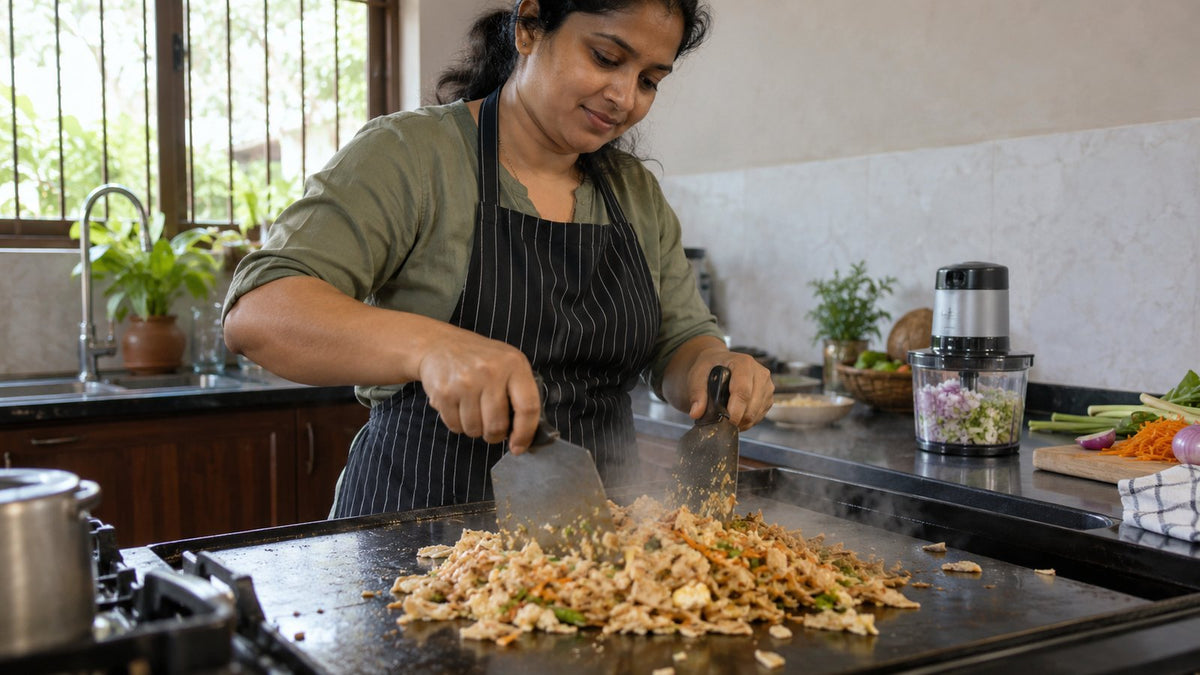
Anyone who has stood near a kottu stall in Colombo or Kandy knows the sound before they see the dish: two blades hitting a hot iron plancha in a fast, steady rhythm, chopping godamba roti, egg, vegetables and meat together in one motion. That's a kottu chopper doing its job, and it's genuinely different from a kitchen knife or a food processor. Recreating that at home raises a fair question: is there an actual kottu chopper you can buy in Sri Lanka, or are you better off with what's already in your kitchen? Here's an honest answer, not a sales pitch.
Quick answer
- A real kottu chopper is a twin-blade hand tool used on the hot griddle, not an electric machine.
- An electric chopper can't chop the roti, but it is great for mincing the onion, leek, carrot and meat filling.
- A wide flat tawa is the closest home match to a kottu griddle.
- Greenlife 300W electric choppers are Rs 2,999 to 4,999; the GreenChef Evok flat tawa goes up to 310mm.
In this guide
What Is a Kottu Chopper, Really?
A true kottu chopper is a twin-blade rocking tool: two curved stainless steel blades, usually joined at a shared handle or wielded one in each hand, rocked side to side over roti strips and filling laid out on a flat, hot surface. It's a mechanical, non-electric tool, closer to a mezzaluna than anything with a motor. That's a different category entirely from a food processor or electric chopper, which spins an enclosed blade inside a bowl to mince soft or wet ingredients. You cannot drop a handful of roti strips into a bowl chopper and get kottu out the other end; the roti needs to be chopped directly on the hot cooking surface, mixed with the filling as it goes, which is exactly what the twin-blade tool is built for.
Why Restaurant Kottu Prep Is Different From Home Cooking
Restaurant and street-cart kottu is built around volume and a dedicated flat iron griddle, a large, heavy plancha that stays hot enough for continuous batches through a full evening service. The cook chops directly on that surface with twin blades, folding in egg, vegetables and meat as they go. A home kitchen doesn't have that griddle, and a gas-stove tawa, even a large one, is smaller and cools faster once you start working the roti across it. That's the honest reason home kottu rarely tastes quite like the stall version even with the right ingredients: it's as much about the surface and chopping method as the recipe.
Manual Chopping vs Twin-Blade Chopper vs Electric Chopper vs Food Processor, for Kottu Specifically
| Method | How it works for kottu | Best for | Not suited to | Approx. cost in Sri Lanka |
|---|---|---|---|---|
| Knife and board | Chop roti into strips before adding to the tawa, mix filling in separately | Occasional home cooks, no extra purchase needed | Slow and tiring for large batches or frequent kottu nights | No extra cost |
| Twin-blade rocking kottu chopper (manual) | The genuine restaurant-style tool, chopped directly on the hot surface | Households that make kottu often and want the authentic chop-and-mix action | Rarely stocked in general appliance retail; needs a specialty or catering-supply source | Not widely sold in appliance shops |
| Electric food chopper (300W, bowl and spinning blade) | Not used on the tawa itself; useful beforehand for mincing onions, leeks, carrots or meat for the filling | Prepping the vegetable and meat mix ahead of cooking | Chopping the roti itself; roti strips are too large and dry for a bowl chopper | Rs 2,999 to 4,999 at Green Life |
| Food processor (larger bowl, multiple blades) | Same limitation as the electric chopper: good for filling prep, not the roti chop | Bigger batches of vegetable or meat prep for large gatherings | The actual roti-chopping step | Usually more than a dedicated chopper |
What To Look For If You Buy a Chopper for Kottu Prep
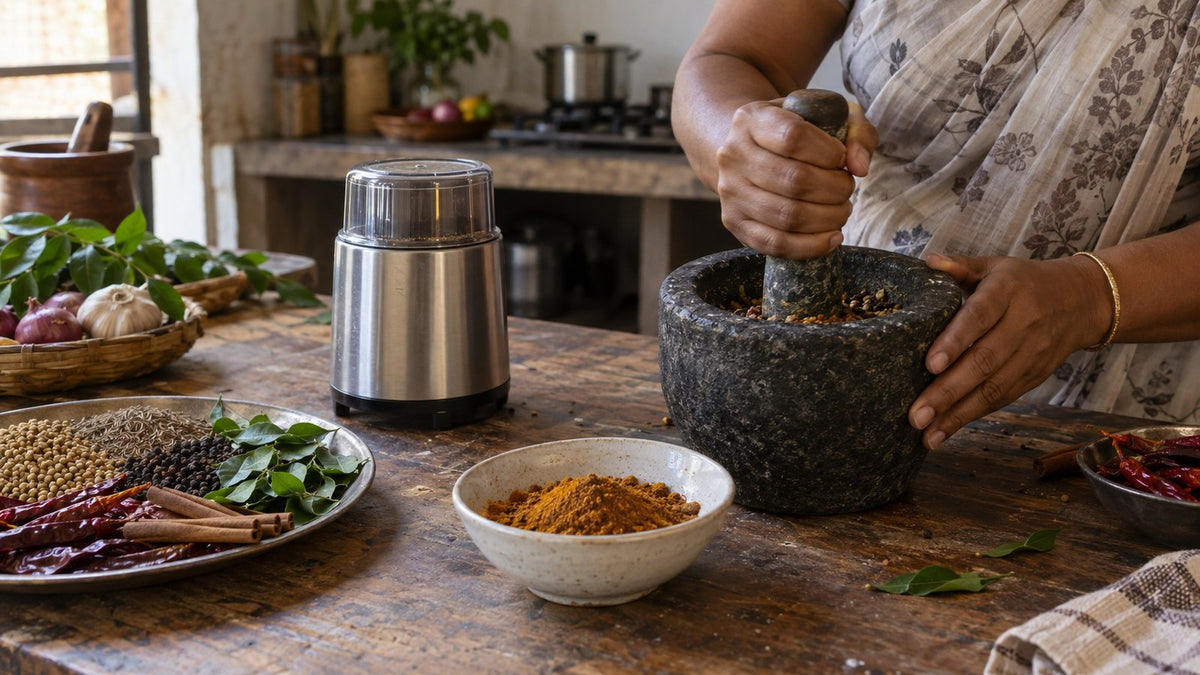
Whether you're after a twin-blade tool or an electric chopper for the filling stage, three things matter more than brand names. Blade material comes first: stainless steel holds an edge longer and resists the rust spotting that shows up fast on lower-grade steel in humid coastal kitchens along the Galle or Negombo coastline. Ease of cleaning matters just as much, since kottu prep involves raw meat and oily filling; look for a chopper with a detachable blade and bowl assembly you can rinse separately from the motor base, rather than one that's a single fused unit. Size should match how often you cook kottu at home: a 2L electric chopper bowl handles a normal family-sized filling batch in one go, while a 3L model suits households that make kottu often enough to batch-prep onions and meat for more than one meal.
Is a Kottu Chopper a Genuinely Under-Served Category in Sri Lanka?
Yes, honestly. There's real search demand for "kottu chopper" and "kothu roti chopper," but neither the big electronics retailers nor most general kitchenware shops carry a dedicated home version of the twin-blade tool. Most home cooks either use two ordinary knives in a rocking motion, a single large knife, or skip the chop-on-the-tawa method entirely and pre-cut the roti with scissors or a knife on a board before it goes in the pan. Green Life doesn't currently stock a dedicated twin-blade kottu chopper, and we'd rather say that plainly than stretch an unrelated product to fit. What we can genuinely help with is the two pieces either side of that gap: the Greenlife 300W Electric Food Chopper for mincing the onion, leek, carrot and meat filling before it hits the pan, and the GreenChef Evok Flat Tawa as the cooking surface itself, which we cover in detail in our non-stick cookware guide.
A steady medium flame on a gas tawa is enough to cook kottu properly without cycling the burner up and down, which also uses less LPG per cook than constantly adjusting a high flame. Both the electric chopper and the flat tawa come with a 1-year warranty.
Frequently Asked Questions
Does Green Life sell a dedicated kottu chopper?
Not currently. Our range covers electric food choppers (300W, 2L and 3L) built for mincing vegetables and meat, and the GreenChef Evok flat tawa for cooking, but not the specialty twin-blade rocking tool used in restaurants. We'd rather tell you that honestly than force a fit that isn't real.
Can my electric food chopper make kottu at home?
Not on its own. A bowl-and-blade electric chopper is genuinely useful for mincing the onion, leek, carrot and meat filling ahead of time, but it can't chop roti strips directly on the tawa the way a restaurant twin-blade chopper does. Think of it as a prep tool, not a kottu-making machine.
What's the difference between a food chopper and a food processor for kottu prep?
For kottu specifically, not much. Both mince the vegetable and meat filling in an enclosed bowl before cooking. A food processor's larger bowl suits bigger batches for gatherings, while a 2 to 3L electric chopper covers most family-sized kottu nights without the extra size and cost.
Is a manual twin-blade kottu chopper worth buying for home use?
If you make kottu often and want the authentic chop-and-mix technique, yes, it's the genuine tool for the job. It's just not something you'll easily find in general appliance retail in Sri Lanka; specialty catering-supply or hardware sources are the more realistic place to look.
What pan should I cook kottu on at home?
A wide, flat non-stick tawa is the closest home equivalent to a restaurant griddle. The GreenChef Evok Flat Tawa, covered in our non-stick cookware guide, comes in sizes up to 310mm, enough surface area to chop and mix a full roti-and-filling batch without it spilling over the edge.
Need a hand choosing?
Not sure which chopper size fits how often you cook? WhatsApp us what you usually prep on 0776882898 and we'll point you to the right one honestly, even if that means telling you we don't carry what you're picturing.