


Gas Stove Not Lighting, Clicking, or Smells Like Gas: A Safety-First Troubleshooting Guide
A gas stove that won't light, clicks without catching, or gives off a faint gas smell is unsettling, especially mid-cook with a pot of dhal already on the boil. Most of the time the cause is simple and safe to check yourself: an empty cylinder, a loose regulator, a dirty burner cap. Sometimes it isn't. This guide covers only the checks genuinely safe for a homeowner to do, and it says clearly, more than once, when the right move is to stop and call a qualified technician instead.
Quick answer
- Smell gas? No switches, no flame. Close the cylinder valve, open windows, leave, then call your supplier.
- Won't light: check the cylinder, the regulator seating and clean, dry burner caps first.
- Clicking but no flame: a dirty cap, or a weak battery on battery-ignition stoves.
- The soap water test finds leaks at joints. Bubbles mean call a technician, don't tighten it yourself.
In this guide
- Before Anything Else: When Should You Stop and Call a Technician Immediately?
- My Gas Stove Won't Light at All, What Can I Safely Check?
- My Stove Clicks But Doesn't Light, What Does That Mean?
- I Smell Gas Right Now, What Do I Do?
- The Soap Water Leak Test: A Safe Way to Check for a Leak Yourself
- When Should You Stop and Call a Technician?
- How a Flame Failure Device Helps Prevent This
- Frequently Asked Questions
Before Anything Else: When Should You Stop and Call a Technician Immediately?
If you smell gas at any point, skip straight to the section below on what to do right now. Do not attempt to fix, tighten, or inspect anything further yourself. A gas smell means calling a qualified LPG technician or your gas supplier, not continuing to check the stove on your own.
My Gas Stove Won't Light at All, What Can I Safely Check?
A few checks are safe and don't require opening or adjusting anything mechanical:
- Is the cylinder actually empty or low? This is the single most common reason a stove won't light at all, easy to miss if you haven't weighed or shaken it recently.
- Is the regulator properly connected and turned to "on"? A regulator slightly off its seating on the cylinder valve won't pass gas through even if the valve itself is open.
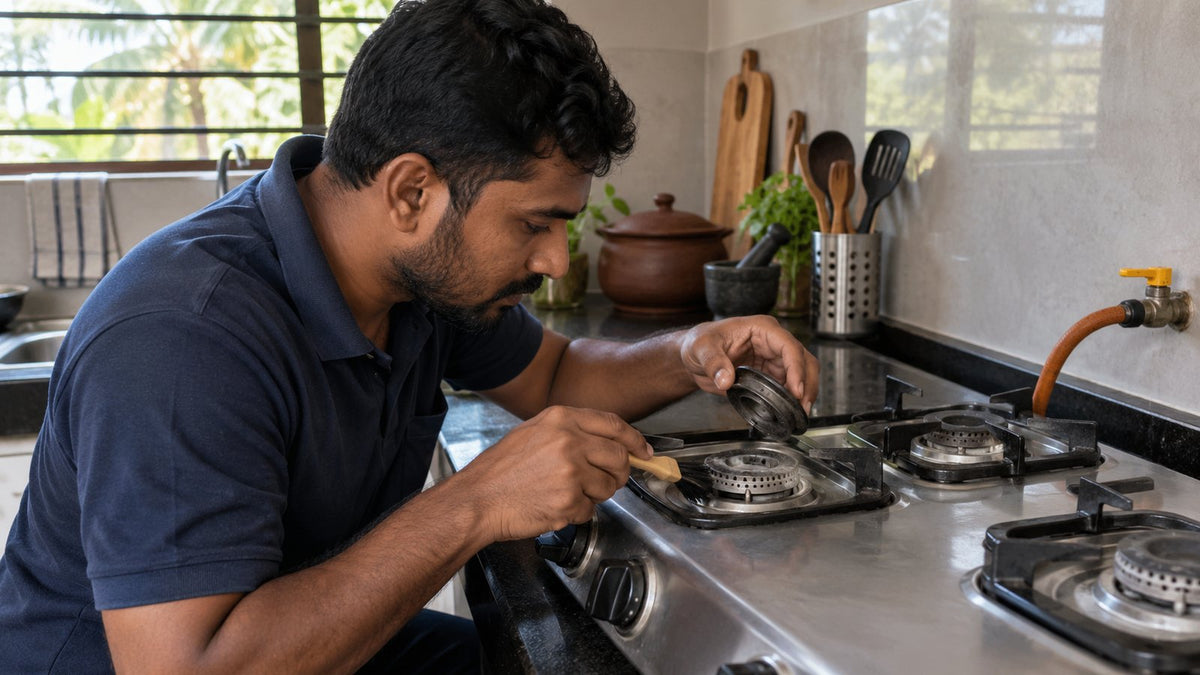
- Are the burner caps seated correctly and clean? Caps that are misaligned, wet, or clogged with spilled food block the gas ports and stop ignition. Once the stove is cool and off, lift the cap, wipe it clean and dry, and reseat it flush and level.
- If it's a battery-ignition model, is the battery fresh? Some auto-ignition stoves use a battery to make the spark, and a weak battery is a frequent, entirely safe fix: just swap it for a fresh one.
My Stove Clicks But Doesn't Light, What Does That Mean?
A clicking sound with no flame usually means the ignition is sparking but gas isn't catching, or isn't reaching the burner strongly enough. On battery-ignition models, a weak battery is the most common safe explanation; check and replace it first. A dirty or wet burner cap is the second most common cause, and cleaning it as described above resolves most cases. If you've checked the cylinder, regulator, batteries, and caps and it's still only clicking, stop and call a technician rather than investigating the ignition electrode yourself.
Safety first
I Smell Gas Right Now, What Do I Do?
Do this immediately, in this order:
- Don't switch any electrical device on or off, including lights, fans, or the cooker hood. A spark can ignite pooled gas.
- Don't light a match or use any open flame to "check" anything.
- Turn off the gas at the cylinder valve, not just the stove knob.
- Open doors and windows to ventilate, then leave the area.
- From a safe distance, call your gas supplier's emergency line or a qualified LPG technician. Don't go back in or investigate the leak yourself.
The Soap Water Leak Test: A Safe Way to Check for a Leak Yourself
This is a genuinely safe, non-invasive check anyone can run at home, and it needs nothing beyond dish soap and water.
- Mix a small amount of dish soap into water in a cup.
- With the cylinder valve open and the stove off, brush the soapy mixture over each joint: the cylinder valve connection, the regulator, and both ends of the hose.
- Watch for bubbles. Steady bubbling at any joint means gas is escaping there.
- If you see bubbles, close the cylinder valve, ventilate, and don't use the stove again until a technician has inspected and fixed the fitting.
- No bubbles but you can still smell gas? Treat it the same way: ventilate, don't touch switches, and call your supplier.
Coastal and humid kitchens, common in apartments around Colombo, Negombo, and Galle, wear out hoses and fittings faster than drier inland homes, so run this test a little more often near the coast. Our gas cylinder safety checklist covers the full maintenance schedule.
When Should You Stop and Call a Technician?
None of the situations in the table below are worth continuing to experiment with; a technician visit is a small cost against the risk of troubleshooting a gas appliance without training.
| Symptom | Safe check you can do yourself | When to call a technician instead |
|---|---|---|
| Stove won't light at all | Check cylinder isn't empty; check regulator is seated and turned on; check burner caps are clean and seated | If the checks don't resolve it, or you're unsure of any step |
| Clicking but no flame | Check the ignition battery if your stove has one; check burner caps for blockage | If clicking continues after a fresh battery and clean caps |
| Faint or occasional gas smell | Run the soap water leak test on all joints | Any bubbles forming, or smell that returns or persists |
| Strong, sudden gas smell | None, do not troubleshoot | Immediately: shut the cylinder valve, ventilate, leave, call your supplier |
| Yellow or orange flame instead of blue | Check that the burner cap is clean and correctly seated | If flame colour doesn't correct after cleaning the cap |
How a Flame Failure Device Helps Prevent This
A flame failure device (FFD) is a small safety mechanism in the burner valve that automatically cuts gas flow if a flame goes out unexpectedly, from a gust, a boil-over, or a draft. It stops a stove from silently releasing unburned gas after a flame has gone out unnoticed. Not every stove has one, so it's worth asking about on any stove. Ask us which models in our range include it.
Frequently Asked Questions
My gas stove clicks constantly but won't light, is that dangerous?
Not dangerous on its own. Clicking without lighting usually means the spark is working but gas isn't reaching the burner strongly enough, often a weak ignition battery or a blocked burner cap. If checking both doesn't fix it, stop and call a technician.
I can smell a faint gas smell but only sometimes, what should I do?
Run the soap water leak test on the cylinder valve, regulator, and hose joints while the stove is off. Any bubbles mean a leak; close the valve and call a technician. If no bubbles appear but the smell continues, treat it as a real leak anyway.
What's a flame failure device and do all gas stoves have one?
It's a safety mechanism that cuts gas flow automatically if a flame goes out unexpectedly. It isn't universal, so confirm it on any stove you're considering. Ask us which models in our range have one.
Can I fix a gas leak myself once I've found it with the soap test?
No. The soap test tells you where the problem is, not how to safely fix it. Tightening a fitting yourself can make a leak worse. Close the cylinder valve, ventilate, and have a qualified technician handle the repair.
Questions about your stove?
Keep this guide somewhere in the kitchen; it takes five minutes and covers most of what a household needs to check safely. If a fault turns out to be a genuine part failure rather than a simple fix, check whether your stove is still within its 1-year warranty before paying for a repair out of pocket. Questions about your regulator, ignition, or whether your stove has a flame failure device? WhatsApp us a photo on 0776882898 and we'll help you figure out the next step honestly, including when it's a technician's job, not ours.
Shop Gas Cookers & HobsGas Cylinder Safety at Home: A Checklist Every Sri Lankan Household Should RunWhatsApp 0776882898